SMALL BUSINESS + COVID-19
Helping 350,000 small businesses recover from COVID-19
Professional Project @The State of Connecticut, Office of Digital Service / Team of 4 / 4 weeks
ABOUT STATE OF CT & BUSINESS.CT.GOV
The State of Connecticut is a notoriously hard place to start, run and grow a small business. To fix this, the State launched a digital transformation initiative to give 350,000 small business owners one website that supports all of their needs: business.ct.gov. In the middle of this initiative, COVID-19 brought the world to a halt, shutting down small businesses indefinitely, making their survival uncertain.
The website that was once intended to foster entrepreneurship now needed to be reimagined to incorporate COVID-19 relief resources as small businesses began to reopen.
OVERVIEW
THE CHALLENGE
Connecticut small business owners faced many challenges around reopening and recovery from the mandatory COVID-19 closures, but there was no central resource that provided all the regulatory guidance, educational materials and assistance that small businesses needed. When seeking answers from the State government, business owners were forced to scour multiple agencies’ websites, but the answers were still unclear or non-existent.
MY ROLE
In June 2020, I conducted a month-long UX research investigation with a team of 3 consultants from Deloitte Digital to better understand business owners’ needs and pain points in order to provide actionable insights to the digital development team.
My contributions: user experience (UX) research, generative research, interviewing, survey design and analysis, insight synthesis, journey mapping, strategy recommendations, usability testing, client presentation, virtual collaboration
Team:
UX Researcher / Consultant Manager (me)
3 Deloitte Digital UX Consultants
State of CT’s Program Manager
METHODS & TOOLS USED
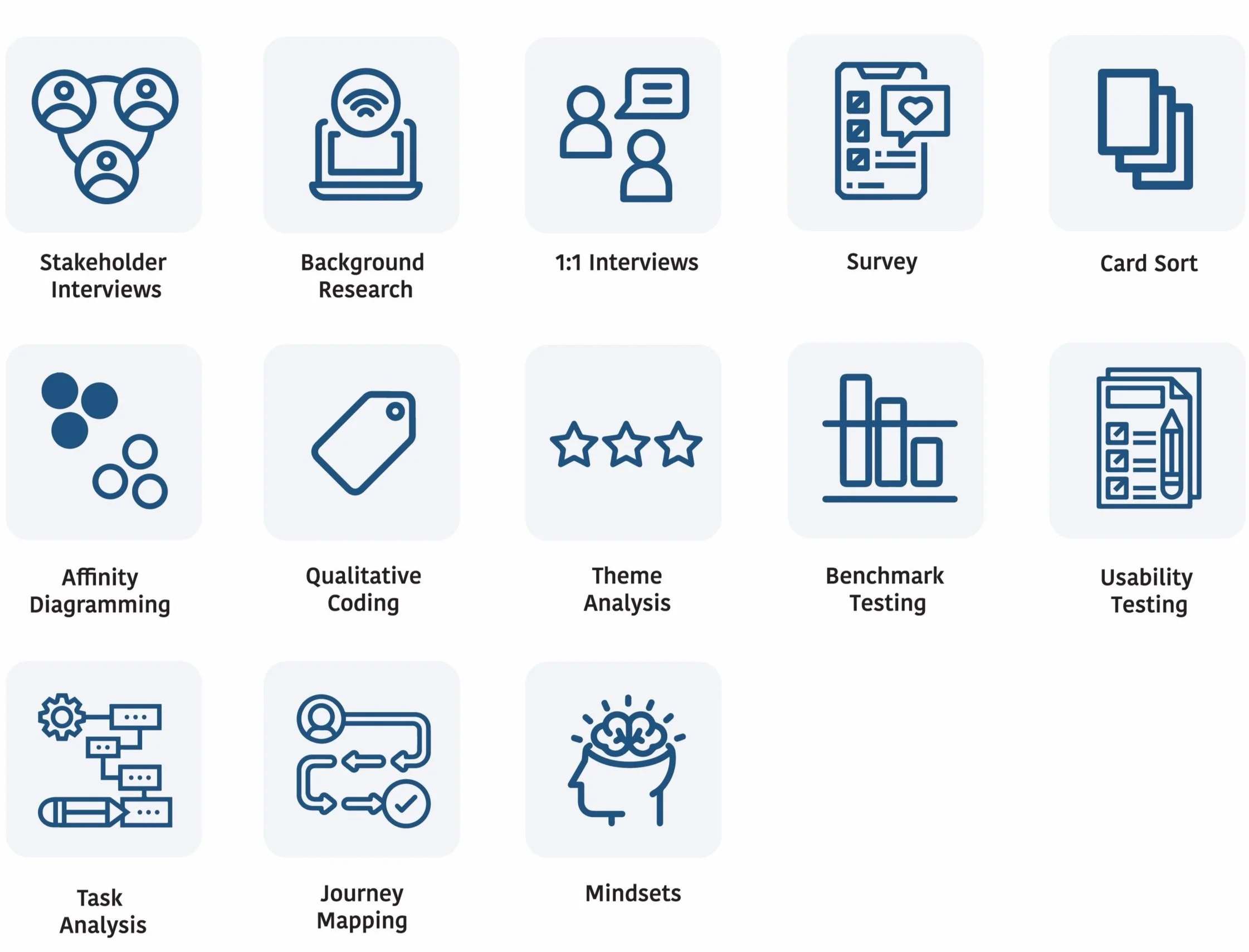
Tools: SurveyMonkey, Miro ,Teams, Adobe InDesign
Project constraints:
Less than 4 weeks to interview 21 business owners, synthesize insights and make strategy recommendations to State leadership
All research conducted remotely during COVID-19 with new team members in different time zones
No budget to compensate participants
PROJECT PLANNING
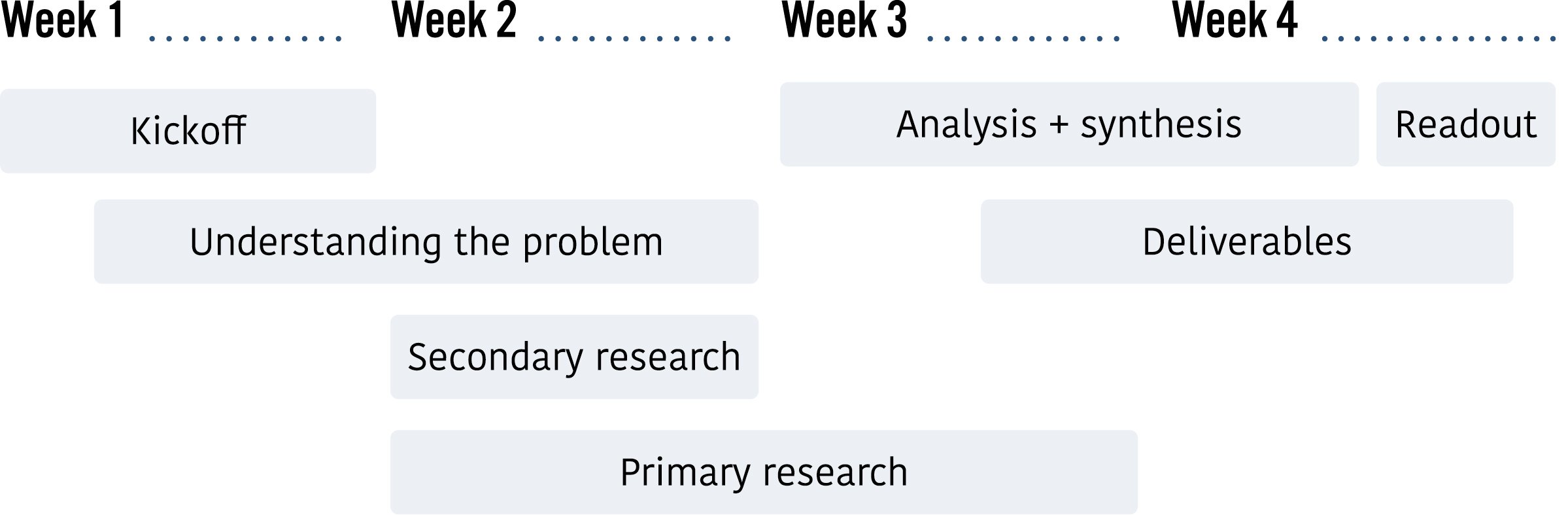
TIMELINE
MY PROCESS*
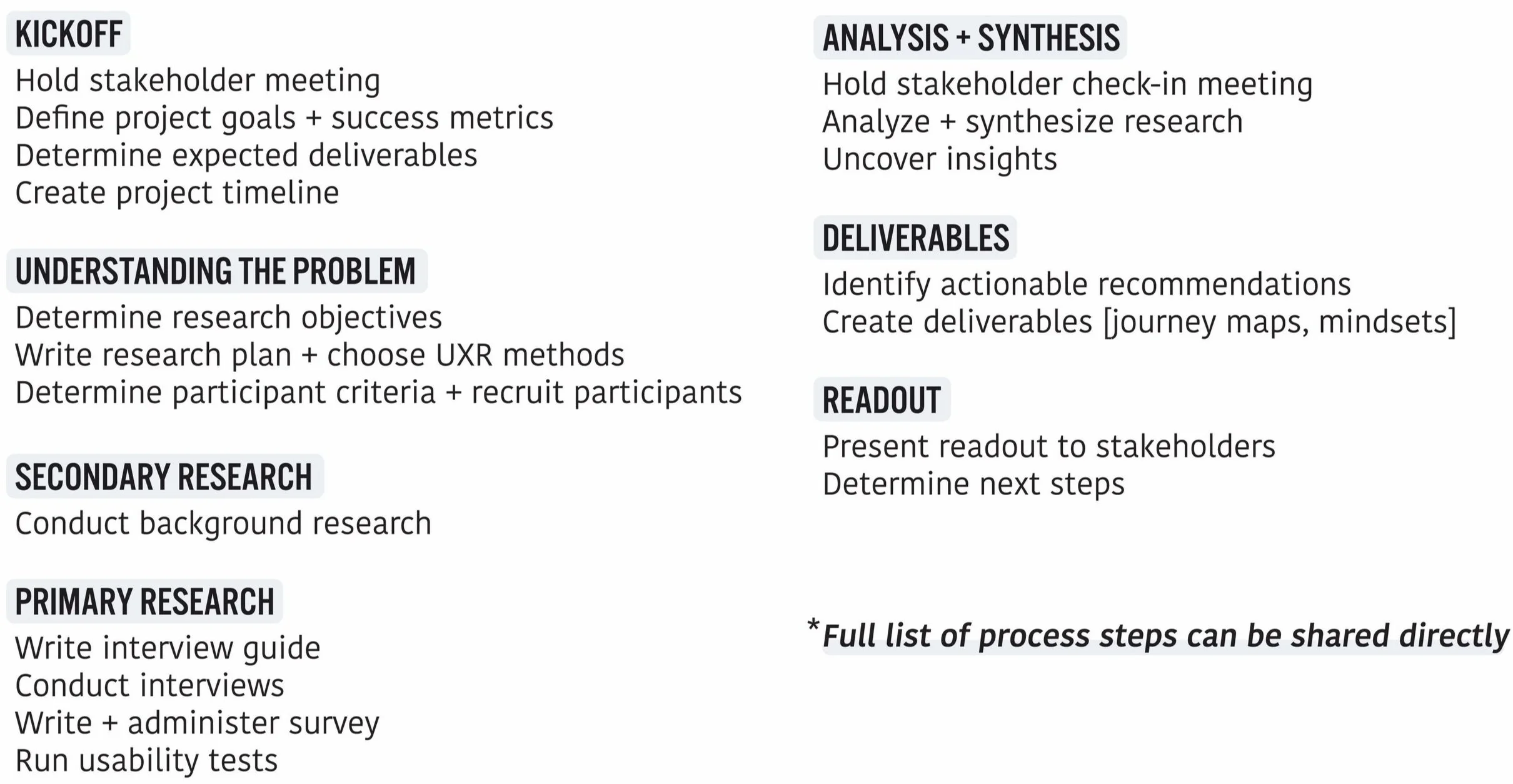
UNDERSTANDING
THE PROBLEM
ALIGNMENT & HIGH-LEVEL RESEARCH QUESTIONS
After the project kickoff meeting with the State’s program manager and the Deloitte consultants (3) to ensure alignment on the timeline, goals and expected deliverables, we set out to answer these high-level questions:
1 What do business owners need the most help with to recover from COVID-19?
2 How do business owners find information they need for COVID-19 relief?
3 What is the most important information business owners need from the State government?
PROJECT GOALS
1 Understand the how small business owners are currently getting the information they need and how confident they are in their ability to find what they need
2 Understand the highest priority information and digital service needs of small business owners [in order to guide decision-making and prioritization of digital resources on business.ct.gov]
GENERATIVE UX RESEARCH
INTERVIEWS
While the team jointly created a study plan, I designed a recruitment strategy to ensure that we reached business owners with diverse personal and professional backgrounds so that our data would truly reflect Connecticut’s business landscape. By reaching out to personal connections and partnering with the local Chambers of Commerce, my outreach plan recruited 2.5x the target goal of interviewees.
Over two weeks, the team virtually co-interviewed 21 small business owners about their professional experiences with COVID-19. During these interviewee-led sessions, the team guided participants through a card sort activity that gauged stress levels around topics like customer safety and repaying loans.
8 > 21
Target recruiting goal
Actual recruited + interviewed
SAMPLE INTERVIEW QUESTIONS
1 How do you anticipate your business changing in the short-term as the state reopens?
2 Explain to me how you get informed about COVID-19 as it relates to your business.
3 What financial programs have you used and what was difficult or confusing about them?
4 What stresses you out the most about moving forward as a business owner in this new normal? And what sorts of resources would help lessen that burden?
SURVEY
For those unable to participate in interviews, the team co-created an online survey via SurveyMonkey that I distributed to Chambers of Commerce and through personal outreach. These close-ended questions provided quantitative data to support the qualitative interview findings. The survey received 90 responses, which I collected and analyzed.
INSIGHTS + ARTIFACTS
COLLABORATIVE ANALYSIS, SYNTHESIS + AFFINITY MAPPING
By collaborating in Miro, the team synthesized our findings and uncovered 4 mindsets & 4 themes…
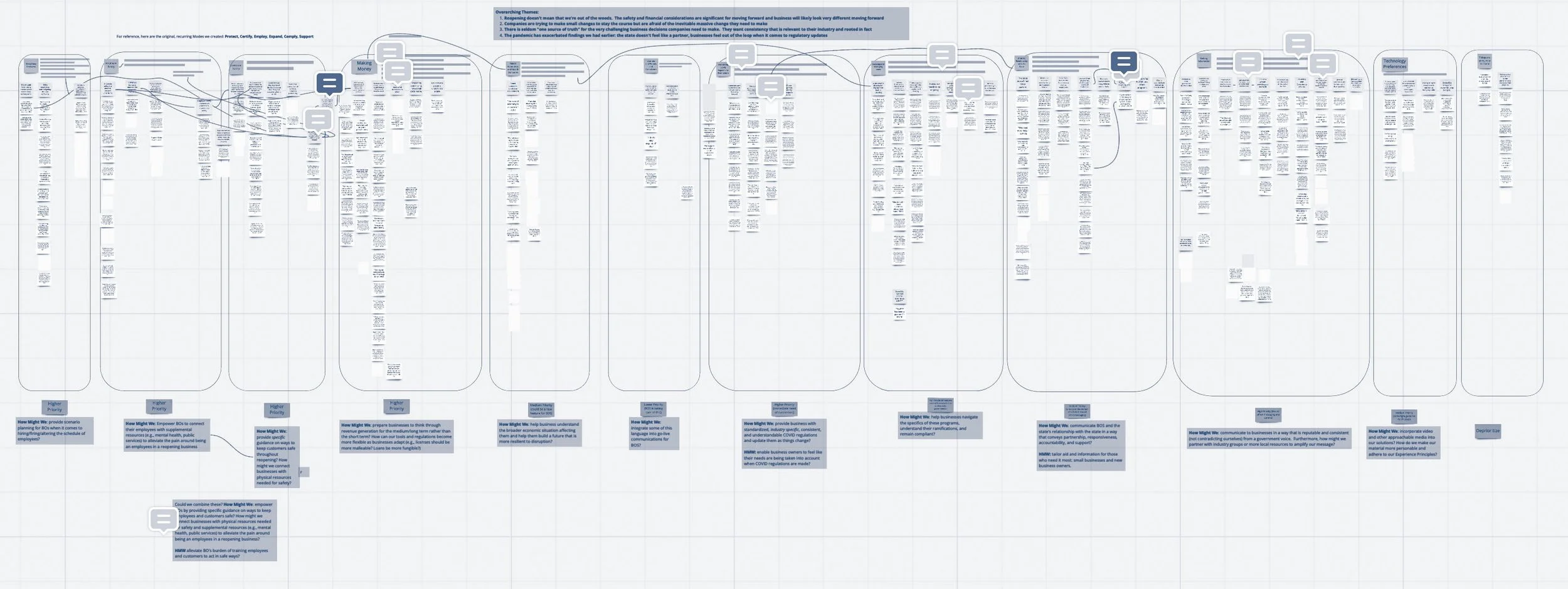
The team’s Miro board (intentionally blurry)
Business owners were sorted into four mindsets based on their understanding of rules and regulations and how proactive they were in seeking out information. Because business owners who participated in the research covered all four quadrants, it was recommended that the State offer varying experiences for tasks that need to be completed through business.ct.gov:
Navigators: A streamlined, birds-eye view experience
Seekers: Checklists and prompts
Rogues: The ability to spend as little time as possible dealing with the State
Followers: Upfront education and clear cues
MINDSETS
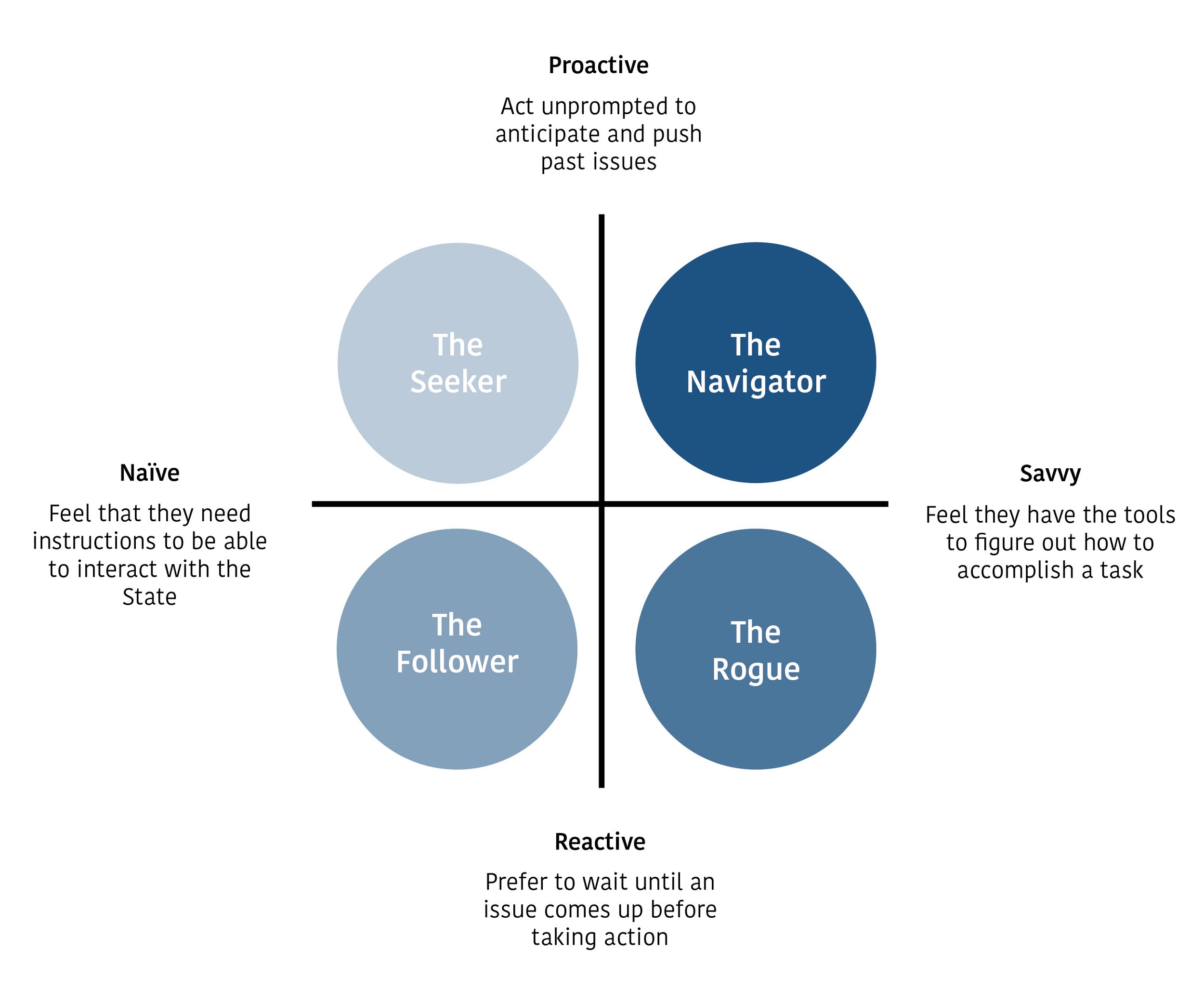
Business owner mindsets (x: tech savviness, y: reactivity)
1
People
We had assumed that making money would be business owners’ chief concern, but it came in second to ensuring their employees’ safety. Because of this concern, many small businesses opted to stay closed past the legal reopening date, forgoing even more revenue in an effort to keep their employees healthy.
THEMES W/INSIGHTS
2
Money
In the short term, many people pivoted their business models, like a recycled sports jersey manufacturer who started making recycled fabric masks. These pivots did not necessarily turn a profit but were intended to keep employees employed and keep the business top-of-mind for customers for when it resumed normal operations.
3
Regulations
Business owners felt that the State’s reopening guidelines were ambiguous, and they could not get clarification on the nuances of the regulations. So, businesses turned to local organizations like Chambers and interest groups, where they were able to find information tailored to their specific needs.
4
Outreach
Business owners felt that the State was not a partner in their recovery and even that it actively supported big business over small business. It became clear that the State had a PR problem.
JOURNEY MAP:
CURRENT STATE &
FUTURE STATE
This co-created journey map outlines the current experience using business.ct.gov as well as the ideal future state of the website for phase 3 (Run) of owning a business.
It highlights gaps and pain points to help State agencies empathize with users.
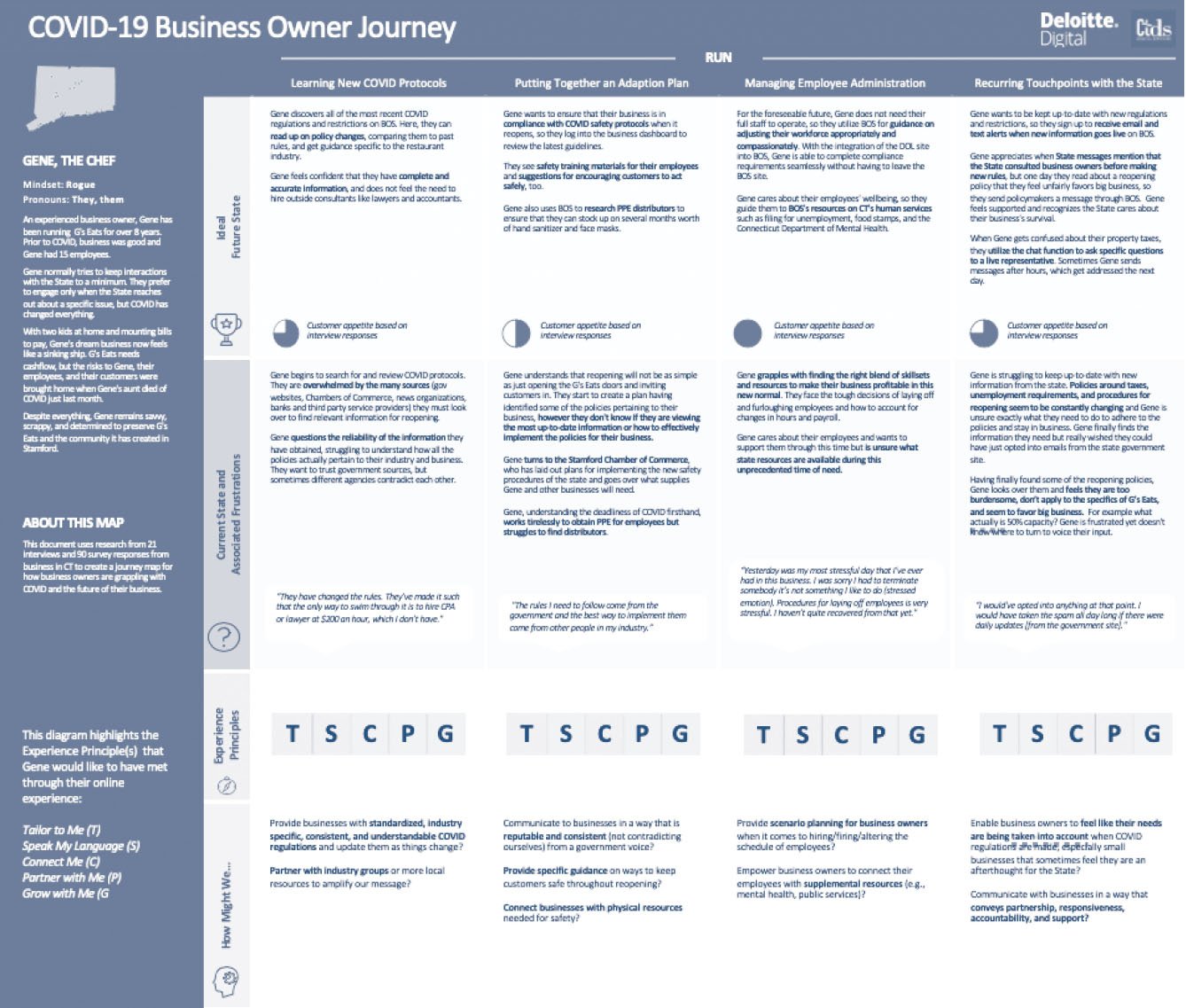
Business owner journey map (intentionally blurry)
"With towns and local development, the mentality is how do we get to yes. My experience with the State...it's always no.”
— Tech company
“
"I had to figure out how to keep my employees employed, and how to keep members from leaving us for good, and try to restructure my entire class curriculum to be live, virtual, online classes.”
— Fitness studio
“
ACTIONABLE
RECOMMENDATIONS
Tied back to the major themes identified, the team provided actionable recommendations for the highest priority additions to business.ct.gov:
1
Provide standardized, industry-specific, consistent and understandable COVID regulations as well as timely updates via email and text when regulations change
Theme: Regulations
2
Provide specific guidance on ways to keep employees and customers safe
Theme: People
3
Offer scenario planning when it comes to hiring/firing/altering the schedule of employees
Theme: People
4
Offer guidance on understanding the broader economic situation
Theme: Money
5
Supply revenue forecasting worksheets that focus on medium/long-term goals rather than short-term goals
Theme: Money
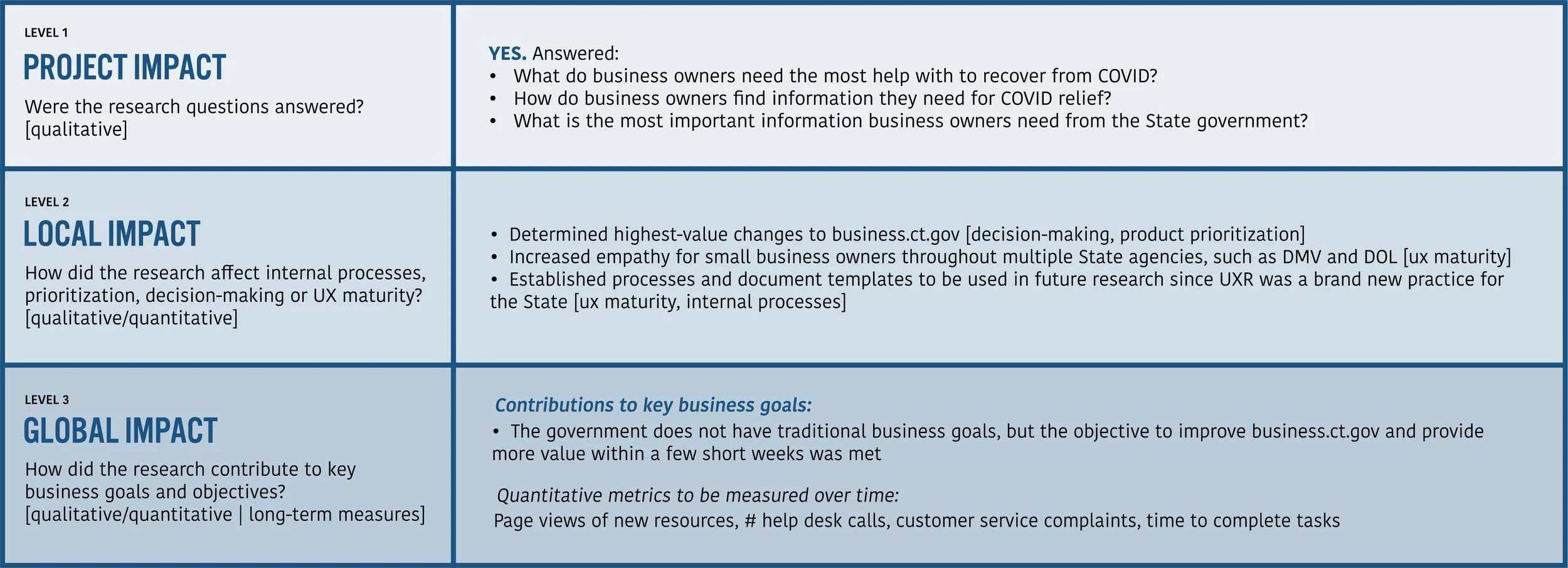
IMPACT